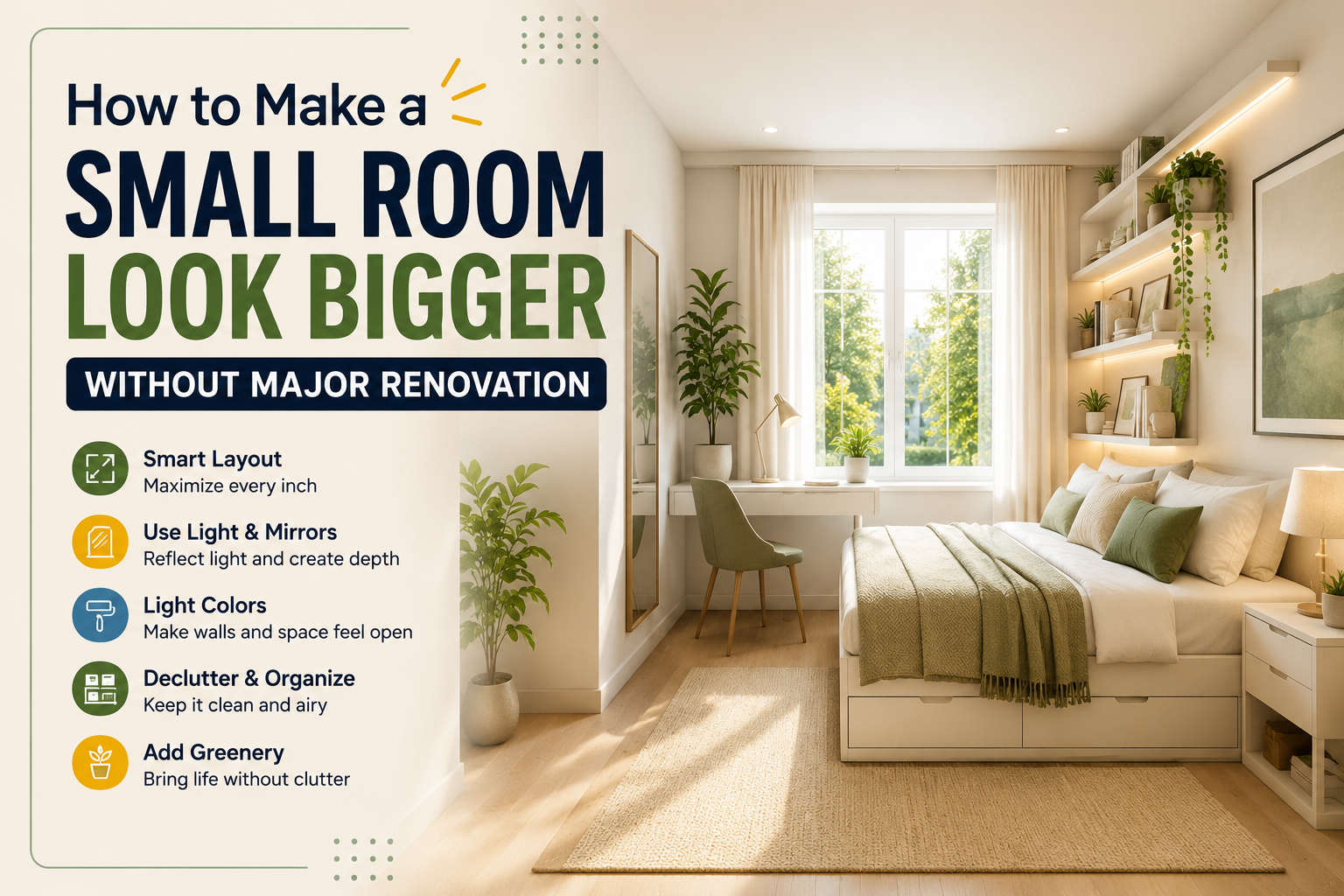
How to Make a Small Room Look Bigger Without Major Renovation: Practical Design Ideas That Work
Learn simple decorating and layout techniques that can visually expand a compact space, improve comfort, and create a brighter, more open room without expensive remodeling.
• Use light colors and better lighting
• Reduce visual clutter and oversized furniture
• Add mirrors strategically
• Choose multifunctional pieces
• Create a consistent, open visual flow
Many homeowners and renters wonder how to make a small room look bigger without major renovation. The good news is that you do not need to knock down walls or spend a large budget to create a more spacious appearance. Small rooms often feel cramped because of visual clutter, poor furniture placement, limited light, and heavy color choices. By making thoughtful adjustments to design, storage, and decoration, you can create the illusion of a larger area while improving everyday functionality. Whether you are working with a bedroom, home office, living room, or studio apartment, these practical ideas can help transform a tight space into one that feels brighter, more comfortable, and surprisingly open.
Start With Light and Color
Choose Light Wall Shades
Soft neutrals, warm whites, pale gray tones, and gentle beige colors reflect more light than darker shades. This reflection helps walls appear farther apart and makes a room feel airy.
Keep Color Transitions Smooth
Strong contrasts can visually divide a room into smaller sections. Using similar tones for walls, trim, and large furniture pieces creates a more continuous appearance that encourages the eye to move naturally through the space.
How to Make a Small Room Look Bigger With Smart Furniture Choices
Select Properly Sized Furniture
Many people assume tiny furniture is always best for small spaces. In reality, several carefully chosen pieces often work better than many small items. Too many furnishings can make a room feel crowded.
Use Furniture With Visible Legs
Sofas, chairs, and tables that expose more floor space underneath create a lighter appearance. The visible flooring helps the room seem larger because the eye can travel farther across the space.
Consider Multifunctional Pieces
Storage ottomans, beds with drawers, foldable desks, and nesting tables reduce clutter while maximizing usable space.
Make the Most of Natural and Artificial Lighting
Allow More Daylight
Natural light is one of the most effective ways to visually enlarge a room. Keep window coverings simple and avoid blocking sunlight with bulky furniture.
Layer Different Light Sources
Instead of relying on a single ceiling fixture, combine floor lamps, table lamps, and wall lighting. Even lighting reduces shadows that can make corners feel smaller.
Use Mirrors Thoughtfully
Mirrors reflect both light and surrounding views. Placing a mirror opposite a window can instantly brighten a room and create the impression of greater depth.
Improve Layout and Visual Flow
| Room Element | Space-Saving Choice | Visual Benefit |
|---|---|---|
| Window Treatments | Light curtains | More natural light |
| Coffee Table | Glass-top design | Less visual weight |
| Storage | Vertical shelving | Uses wall height efficiently |
| Seating | Furniture with legs | More visible floor area |
| Decor | Fewer larger accents | Cleaner appearance |
| Lighting | Multiple light sources | Brighter, open atmosphere |
Keep Walkways Clear
Furniture should support comfortable movement throughout the room. Tight pathways make a space feel smaller than it actually is.
Draw Attention Upward
Vertical artwork, tall bookshelves, and floor-to-ceiling curtains encourage the eye to move upward, emphasizing room height and creating a more expansive feeling.
Practical Steps to Create a More Spacious Look
Remove unnecessary items from visible surfaces and floors.
Rearrange larger pieces to improve movement and openness.
Increase brightness with layered lighting sources.
Position it to reflect light and expand visual depth.
Install shelves or decorative elements higher on walls.
Choose fewer, meaningful accessories for a cleaner appearance.
If replacing furniture is not possible, try removing one nonessential piece from the room for a week. Many people discover the room feels noticeably larger and functions better with less furniture.
Common Mistakes to Avoid
- Using heavy, dark curtains that block natural light.
- Pushing every piece of furniture tightly against walls without considering flow.
- Displaying too many decorative items on shelves and surfaces.
- Choosing oversized furniture that dominates the room.
- Ignoring vertical storage opportunities.
- Relying on a single dim light fixture.
Quick Checklist
- Use light and reflective colors.
- Keep windows as open as possible.
- Reduce visible clutter regularly.
- Add mirrors to increase perceived depth.
- Choose multifunctional furniture.
- Use wall height efficiently.
Helpful Resource
University of Minnesota Extension
Frequently Asked Questions
Do mirrors always make a room look larger?
Mirrors are most effective when they reflect light, windows, or attractive parts of the room. Poor placement may provide little visual benefit.
What is the best color for a small room?
Light neutrals and soft shades generally create the most open feeling because they reflect light and reduce visual heaviness.
Can rugs make a small room feel bigger?
Yes. A properly sized rug that fits the room well can unify the space and create a more spacious appearance.
Is decluttering more important than decorating?
In many small rooms, reducing clutter produces a greater visual impact than adding new decorative items.