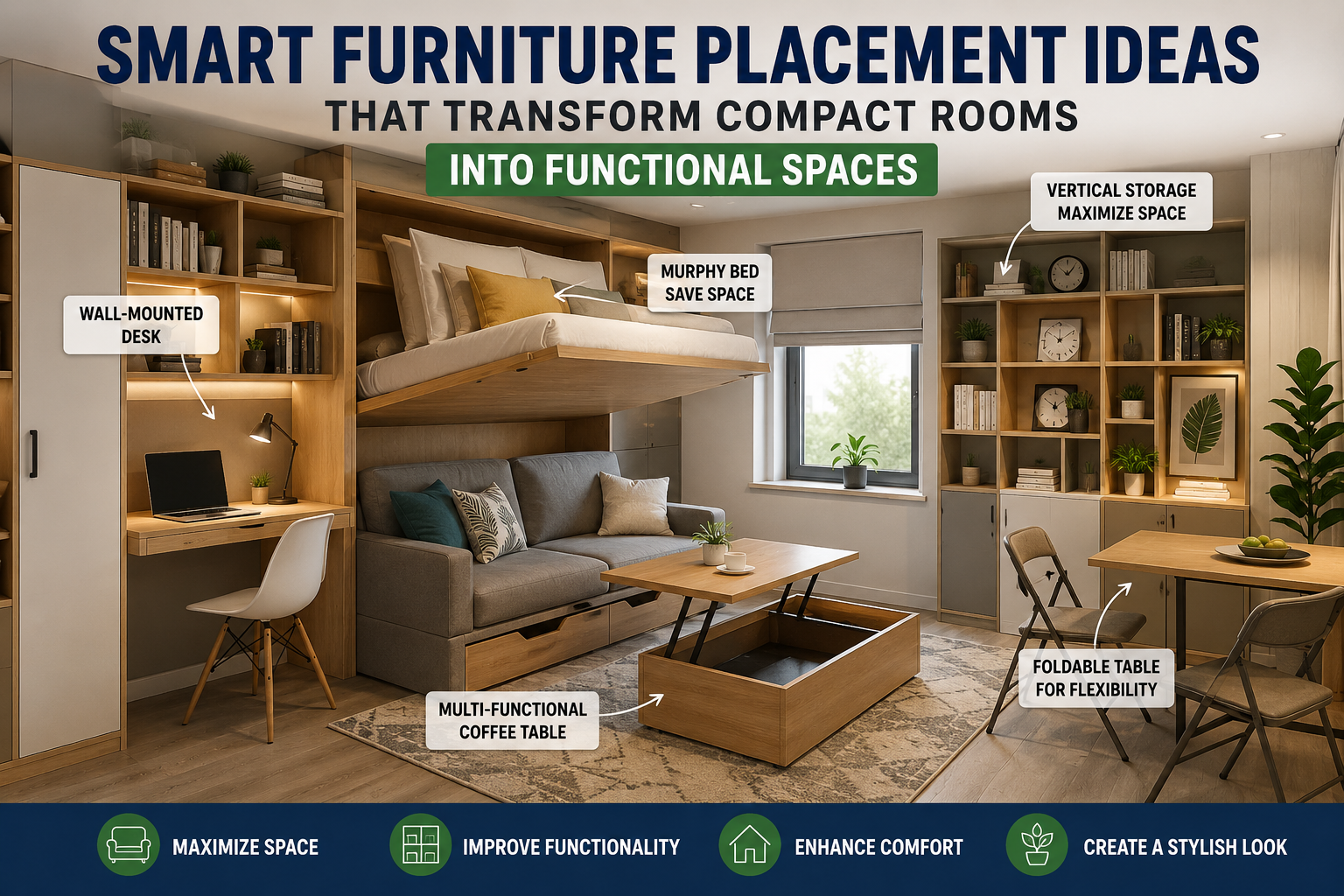
Arrange Your Furniture Smarter, Not Bigger
The way furniture is positioned can dramatically improve how a compact room looks and functions. With thoughtful placement and a few simple adjustments, small spaces can feel open, organized, and surprisingly versatile without adding extra square footage.
When a room feels crowded, many people assume they simply need more space. In reality, poor furniture placement is often the real problem. Even beautifully designed furniture can make a room feel cramped if it’s arranged without considering movement, balance, and functionality. Smart layouts help maximize every corner, improve natural flow, and create a comfortable environment where daily activities become easier. Whether you’re furnishing a studio apartment, a small bedroom, or a compact living room, strategic placement can completely transform the way your home feels.
Begin With the Room’s Primary Purpose
Every room should have one main function. Before moving furniture, decide how you use the space most often. A living room may also serve as a workspace, while a bedroom might include a reading corner. Identifying the room’s primary purpose helps determine where the largest furniture pieces should be placed.
Avoid trying to fit too many unrelated activities into one area. A focused layout creates a cleaner and more functional environment.
Create Clear Walking Paths
One of the easiest ways to make a compact room feel larger is by maintaining open pathways. Furniture should never force people to squeeze through narrow gaps or walk around unnecessary obstacles.
Keep Entryways Open
Allow immediate visibility into the room instead of blocking the entrance with large furniture.
Leave Space Around Seating
Small gaps between furniture improve comfort and make rooms appear less crowded.
Use Natural Traffic Flow
Arrange furniture around how people naturally move through the room.
Reduce Obstacles
Remove unnecessary side tables or decorative items that interrupt movement.
Choose the Right Wall for Large Furniture
Position the largest furniture pieces against the longest wall whenever possible. This creates a stronger visual anchor while freeing the center of the room for movement. Floating furniture can also work well, but only if enough walking space remains around it.
Use Corners More Efficiently
Corners are often overlooked. A compact reading chair, corner desk, or floating shelf can transform unused space into something practical without affecting the room’s openness.
| Room Area | Smart Furniture Placement |
|---|---|
| Living Room | Place the sofa against the longest wall and use nesting tables. |
| Bedroom | Center the bed and keep pathways clear on both sides. |
| Dining Area | Position the table near a wall when not entertaining guests. |
| Home Office | Face the desk toward natural light while keeping storage nearby. |
Let Natural Light Flow Freely
Avoid placing tall cabinets or bulky furniture directly in front of windows. Allowing sunlight to move throughout the room instantly creates a brighter and more spacious atmosphere.
If privacy is important, choose light curtains instead of heavy drapes that block daylight.
Use Multi-Functional Furniture Carefully
Furniture that serves more than one purpose can reduce clutter and save valuable floor space. However, avoid filling every corner simply because furniture offers additional storage.
Storage Ottomans
Combine seating with hidden storage for blankets, books, or games.
Nesting Tables
Expand surface space only when needed and tuck them away afterward.
Wall-Mounted Desks
Create a functional workspace without occupying permanent floor space.
Foldable Dining Tables
Perfect for everyday use while expanding for guests when necessary.
Arrange Furniture Around Everyday Activities
Rather than copying magazine layouts, organize furniture according to how your household actually lives. Keep frequently used items within easy reach and position seating where conversations feel natural.
Keep the Layout Flexible
Your needs may change throughout the year. Rearranging furniture occasionally can improve comfort, create better natural light, and refresh the appearance of your home without purchasing anything new.
Frequently Asked Questions
No. While wall placement often works in compact rooms, floating certain pieces can improve balance if enough space remains.
Comfortable pathways help people move naturally without squeezing between furniture, making rooms feel much larger.
Yes. Strategic placement often enhances functionality and visual space without requiring any renovations or new furniture.
Final Thoughts
Smart furniture placement is one of the most effective ways to improve compact living spaces. By focusing on clear walking paths, natural light, balanced layouts, and furniture that supports your daily routine, you can transform even the smallest room into a practical and inviting environment. Thoughtful arrangement encourages better organization, increases comfort, and helps every square foot serve a meaningful purpose. Instead of wishing for more space, make the most of the space you already have through intentional design and flexible layouts.