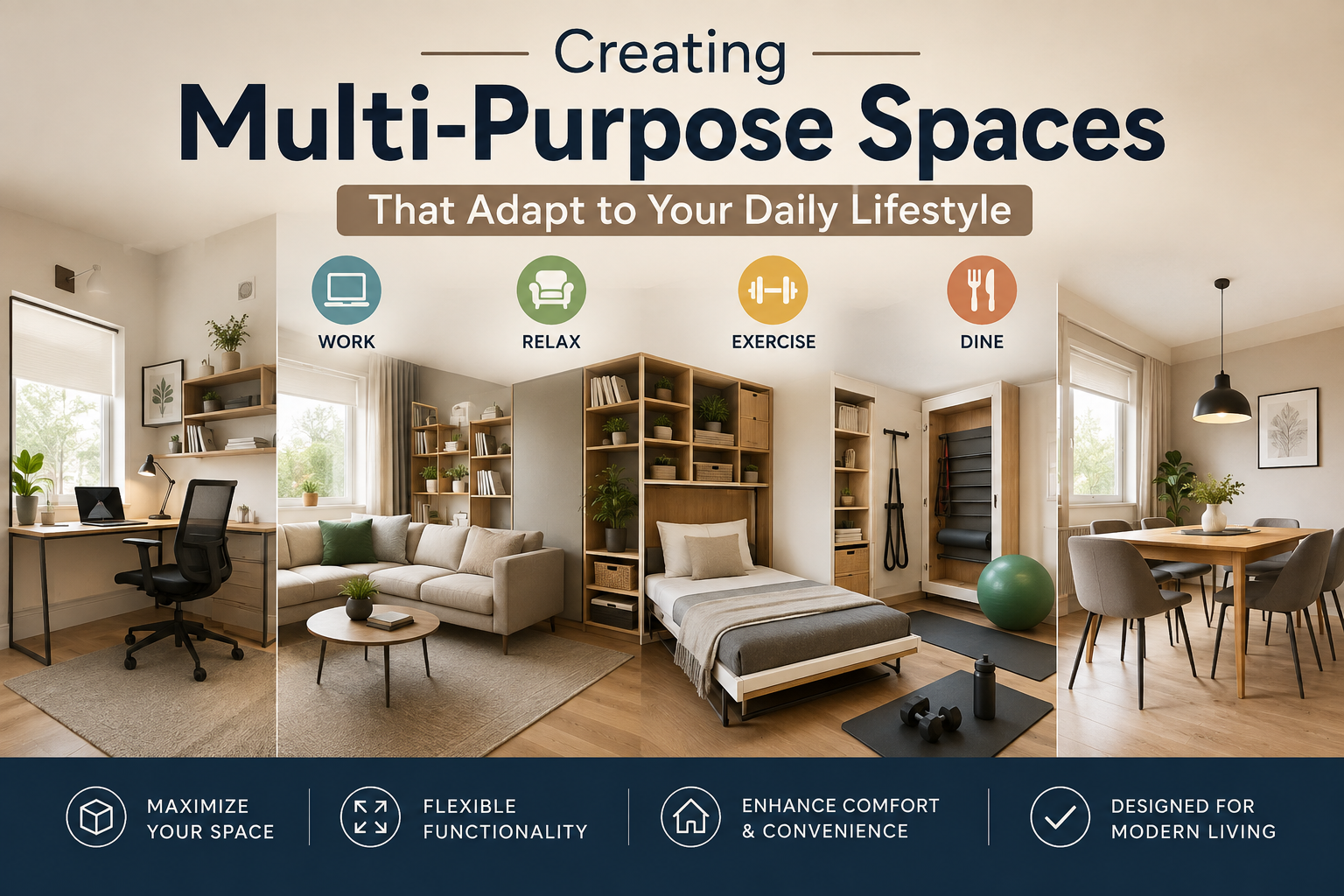
A well-designed home should support every part of your daily routine. Learn how to create rooms that easily transform for work, relaxation, dining, hobbies, and family life—without feeling crowded.
Modern lifestyles are constantly changing throughout the day. A dining table may become a workspace in the morning, a study area in the afternoon, and a place for family dinners at night. Instead of dedicating every room to a single purpose, many homeowners are embracing multi-purpose spaces that provide flexibility, improve organization, and make every square foot more useful. With thoughtful planning, even a compact home can comfortably support different activities without sacrificing comfort or style.
Why Multi-Purpose Spaces Matter
Homes today need to accommodate more than ever before. Remote work, online learning, fitness, entertainment, and hobbies often happen under one roof. Creating flexible spaces allows each area to serve multiple roles while reducing clutter and maximizing available space.
The goal isn’t to make every room do everything. Instead, it’s about designing areas that can transition smoothly between different activities throughout the day.
“A room becomes more valuable when it adapts to your lifestyle instead of limiting it.”
Start by Understanding Your Daily Routine
Before rearranging furniture, observe how your household uses each room. Identify activities that happen regularly and look for opportunities where two or more functions can comfortably share the same space.
- Morning work or study sessions
- Family meals
- Reading and relaxation
- Exercise routines
- Creative hobbies
- Evening entertainment
Once you understand these patterns, it becomes much easier to design spaces that naturally adapt throughout the day.
Choose Furniture That Performs Multiple Jobs
Storage Ottomans
Provide seating, hidden storage, and even serve as a coffee table.
Foldable Tables
Expand when needed for work or dining, then fold away to free space.
Sofa Beds
Turn living rooms into comfortable guest rooms whenever necessary.
Modular Shelving
Create room dividers while offering valuable storage on both sides.
Create Activity Zones
Instead of building physical walls, define different functions using rugs, lighting, shelving, or furniture placement. Visual zones help each activity feel organized without making the room appear smaller.
For example, one corner may contain a reading chair and bookshelf, while another section includes a compact desk for work. Even though both areas share the same room, they remain visually separate.
Keep Storage Close to Each Activity
A flexible room only works when everything has a designated place. Store supplies near where they’re used so transitions become quick and effortless.
| Activity | Smart Storage Idea |
|---|---|
| Remote Work | Desk drawer organizers and cable boxes |
| Reading | Basket beside the chair for books and blankets |
| Fitness | Decorative storage bin for yoga mats and resistance bands |
| Crafts | Portable containers that fit inside cabinets |
Plan Easy Daily Transitions
One of the biggest advantages of a multi-purpose room is how quickly it can change from one function to another. Focus on simple adjustments rather than complete rearrangements.
Maintain a Simple Color Palette
Using consistent colors throughout a flexible room helps different functions blend together naturally. Neutral tones paired with a few accent colors create harmony while allowing furniture and décor to work across multiple purposes.
Reduce Clutter Regularly
Multi-purpose rooms collect items quickly because they support many activities. Set aside a few minutes each day to return objects to their proper storage locations. Small daily habits prevent clutter from becoming overwhelming.
Frequently Asked Questions
Yes. With smart furniture and organized storage, a single room can comfortably support work, relaxation, hobbies, and dining.
No. Many existing pieces can simply be rearranged or paired with affordable storage solutions.
Create dedicated storage for every activity and spend a few minutes resetting the room at the end of each day.
Final Thoughts
A home works best when it adapts to the people living in it. Multi-purpose spaces allow every room to evolve throughout the day without feeling crowded or disorganized. By understanding your routine, choosing versatile furniture, creating clear activity zones, and maintaining thoughtful storage, you can transform even a modest home into a flexible living environment that supports work, relaxation, family time, and personal hobbies. Rather than adding more rooms, smart design helps every existing space perform better, making daily life simpler, more organized, and far more enjoyable.