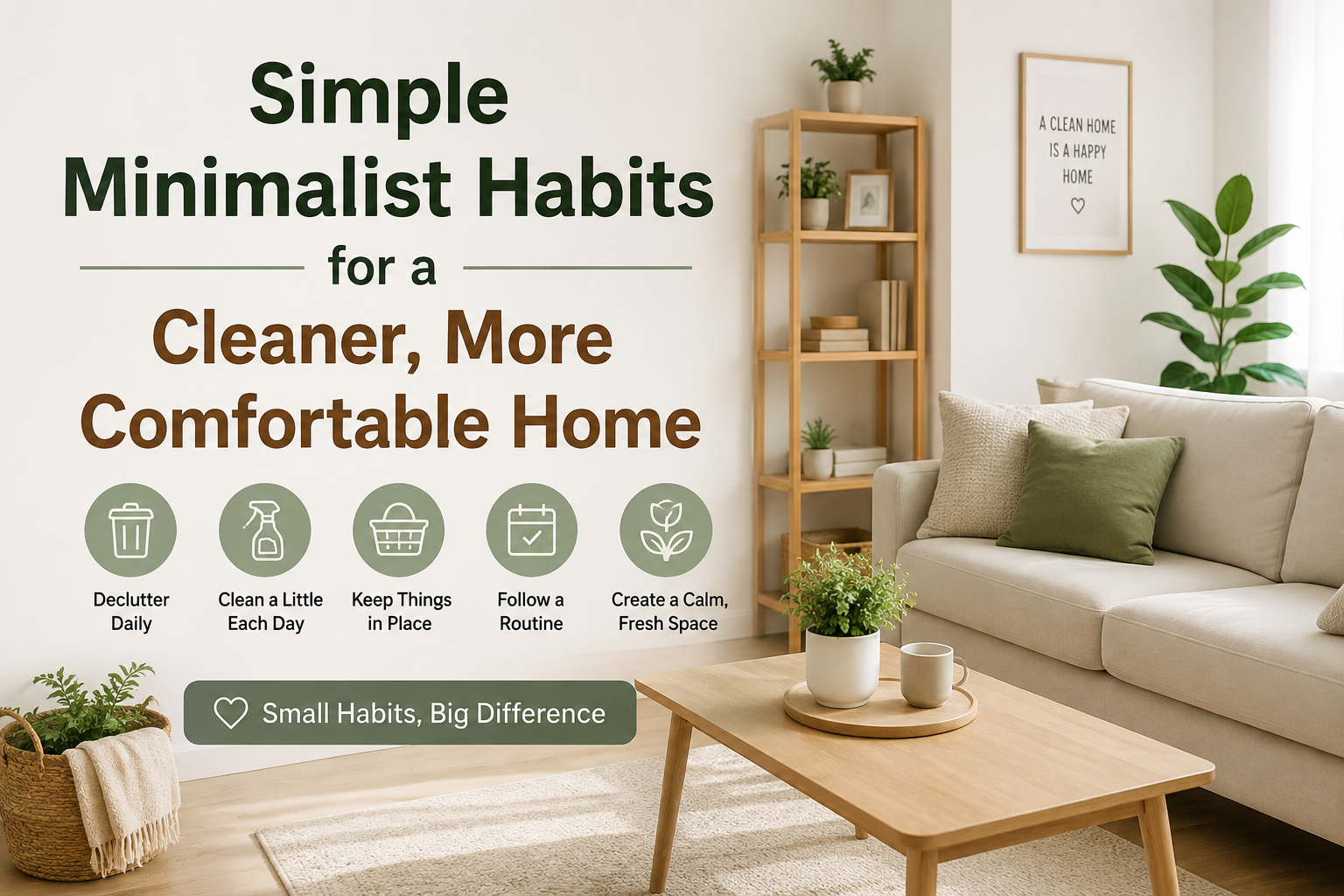
Minimalism isn’t about owning as little as possible—it’s about building practical habits that reduce clutter, simplify daily routines, and create a home that feels peaceful, functional, and easy to maintain.
A comfortable home is rarely the result of one big cleaning session. Instead, it’s created through consistent habits that prevent clutter from building in the first place. Minimalist living focuses on intentional choices, helping you spend less time managing possessions and more time enjoying your space. Small daily routines can make every room feel cleaner, calmer, and easier to organize without requiring expensive storage solutions or major renovations.
Understand the Purpose of Minimalism
Minimalism is often misunderstood as an empty or overly simple decorating style. In reality, it’s a practical approach to living with only the things that truly serve a purpose or bring value to your everyday life.
When unnecessary items disappear, cleaning becomes faster, organizing becomes easier, and every room feels noticeably larger and more relaxing.
Build Small Daily Habits Instead of Big Cleaning Days
The most organized homes rely on consistency rather than perfection. A few minutes of maintenance every day can prevent hours of decluttering later.
Clear Surfaces
Return everyday objects to their proper place before going to bed.
One-Minute Rule
If a task takes less than one minute, complete it immediately.
Daily Reset
Spend ten minutes restoring each room before ending the day.
Regular Review
Remove unused belongings every few months to prevent accumulation.
Give Every Item a Permanent Home
One of the biggest causes of clutter is uncertainty about where things belong. Keys, chargers, paperwork, shoes, and household supplies should each have a designated storage location.
When everyone in the household knows exactly where items belong, tidying up becomes automatic instead of stressful.
Buy With Intention
Minimalist habits begin before new items enter the home. Instead of making impulse purchases, consider whether each item solves a real problem or simply creates another possession to manage.
| Before Buying | Helpful Question |
|---|---|
| Clothing | Will I wear this regularly? |
| Kitchen Items | Do I already own something similar? |
| Decor | Will this improve the room or add clutter? |
| Storage Products | Am I organizing too much instead of decluttering? |
Follow a Simple Daily Routine
Minimalist living doesn’t require complicated schedules. A consistent routine keeps your home under control with very little effort.
Decorate With Purpose
A few carefully chosen decorative pieces often create more impact than filling every shelf or wall. Empty space is an important part of interior design because it allows furniture and meaningful décor to stand out naturally.
Choose quality over quantity and let each decorative item contribute to the atmosphere rather than competing for attention.
Reduce Visual Noise
- Store cables out of sight.
- Use matching storage baskets.
- Limit countertop accessories.
- Keep entryways simple and organized.
- Choose neutral colors for larger furniture.
- Rotate seasonal decorations instead of displaying everything year-round.
Focus on Comfort Instead of Perfection
A minimalist home doesn’t need to look like a showroom. It should feel welcoming, functional, and easy to live in. Comfort comes from having enough space to move freely, find what you need quickly, and enjoy your surroundings without constant cleaning.
Frequently Asked Questions
Yes. Simple routines and organized storage help every family member contribute to keeping the home tidy.
No. Minimalism encourages keeping items that are useful, meaningful, or regularly used while removing unnecessary clutter.
Many people experience noticeable improvements after consistently following small habits for just a few weeks.
Final Thoughts
Minimalist home habits are less about strict rules and more about creating a lifestyle that supports comfort, simplicity, and organization. Small actions like putting items away immediately, reducing unnecessary purchases, maintaining clear surfaces, and reviewing possessions regularly can transform your home over time. Instead of constantly fighting clutter, you’ll build routines that naturally keep every room clean, functional, and enjoyable. By focusing on intentional living rather than perfection, your home becomes easier to maintain and far more relaxing every single day.