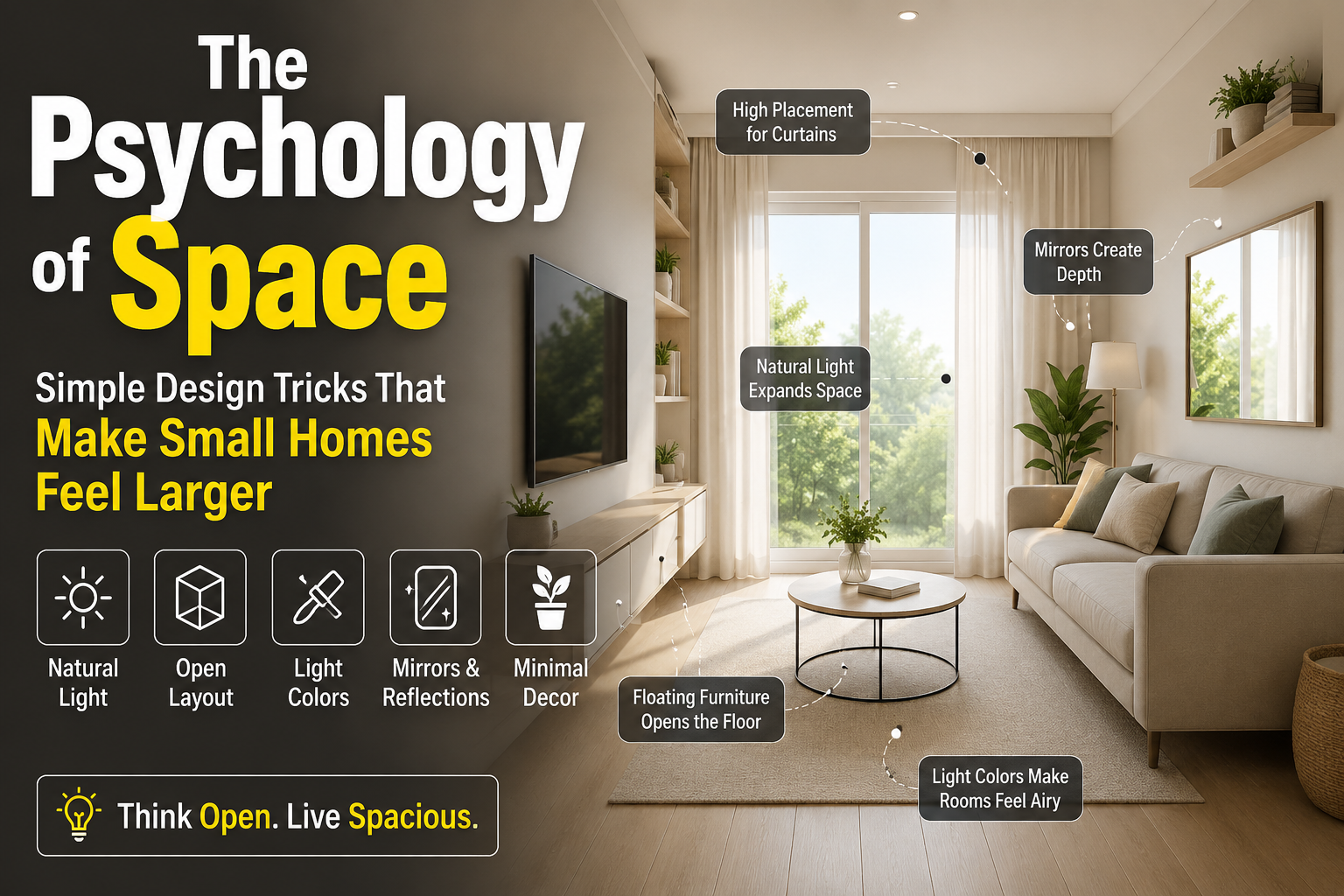
Small homes don’t have to feel cramped. Smart design choices can completely change how a room feels, making it brighter, calmer, and visually larger while improving everyday comfort.
Many people assume that a larger home automatically provides a better living experience. In reality, the way a space is arranged often has a greater impact than its actual size. Interior designers frequently use psychological design principles to influence how people perceive a room. Through thoughtful furniture placement, lighting, color choices, and organization, even compact homes can feel surprisingly open and welcoming.
Why Space Is More About Perception Than Size
Our brains constantly interpret visual information. When a room contains too many competing objects, sharp color contrasts, or blocked pathways, it immediately feels crowded. On the other hand, clean layouts, consistent colors, and visible floor areas create a sense of openness even if the room dimensions remain exactly the same.
This psychological effect explains why hotel rooms, model apartments, and professionally staged homes often appear much larger than expected. Designers intentionally guide your eyes toward open areas instead of clutter, allowing the brain to perceive more available space.
Use Light Colors to Expand Visual Space
Color strongly influences how large a room appears. Soft neutrals, warm whites, gentle grays, and light earth tones reflect more natural light throughout the room. Brighter surfaces reduce harsh shadows and make walls appear farther apart.
- Choose similar shades for walls and ceilings.
- Use lighter curtains to allow daylight inside.
- Avoid combining too many dark colors in small rooms.
- Add subtle accent colors through pillows or artwork instead of painting entire walls.
Keep Furniture Proportional
Oversized furniture can overwhelm a compact room. Instead of filling every corner, select furniture that matches the room’s scale. Pieces with visible legs create empty space underneath, allowing light to travel across the floor and making the room feel less crowded.
Choose Slim Profiles
Sofas, tables, and chairs with thinner frames occupy less visual weight while still providing comfort.
Leave Walking Space
Maintaining comfortable pathways helps the room feel open and improves everyday movement.
Limit Large Pieces
One quality sofa often works better than several bulky seating options packed together.
Use Multi-Purpose Items
Storage benches and nesting tables reduce clutter without sacrificing functionality.
Let Natural Light Become Part of the Design
Sunlight naturally enlarges a room visually. Heavy curtains, oversized furniture placed in front of windows, or dark blinds can block valuable light. Keep window treatments simple whenever privacy allows.
Mirrors positioned opposite windows can also reflect daylight across the room, creating additional brightness and the illusion of greater depth without changing the room itself.
Create Clear Sight Lines
When entering a room, your eyes should easily travel across it. Tall storage units near entrances or furniture blocking direct views interrupt these sight lines, making rooms feel shorter.
Instead, arrange furniture so the longest view remains visible. Even a few extra feet of uninterrupted floor can significantly improve the perception of space.
Reduce Visual Clutter
Clutter isn’t only about the number of possessions. Too many patterns, decorations, exposed cables, or mismatched storage containers create mental overload. Organized rooms feel calmer because the brain processes them more easily.
| Design Choice | Psychological Effect |
|---|---|
| Open shelves with fewer items | Feels lighter and less crowded |
| Hidden storage | Reduces visual distractions |
| Matching storage baskets | Creates consistency and order |
| Simple wall decorations | Allows the room to breathe |
Use Vertical Space Wisely
Many homeowners overlook the upper portion of their walls. Floating shelves, tall bookcases, and vertical storage encourage the eyes to move upward, making ceilings appear higher.
However, avoid filling every inch. Leaving some empty wall space is equally important because negative space helps balance the room visually.
Keep Flooring Consistent
Changing flooring materials between connected spaces can make each room appear smaller. Using similar flooring throughout creates visual continuity that naturally makes the home feel larger.
Large area rugs rather than several small rugs also help maintain uninterrupted floor space.
Choose Simple Patterns
Large, bold prints often dominate compact rooms. Soft textures and subtle patterns create interest without overwhelming the eye. The goal is to maintain harmony rather than constant visual stimulation.
Organize Everyday Items
Frequently used objects such as keys, chargers, shoes, mail, and remote controls often become permanent clutter. Giving every item a designated home reduces visible mess and supports a more spacious environment.
- Use decorative baskets for daily essentials.
- Store seasonal items elsewhere.
- Avoid leaving countertops completely full.
- Return items after each use.
Balance Decoration With Empty Space
One common decorating mistake is trying to fill every empty wall or shelf. Empty space is an intentional design element. It provides visual breathing room and helps highlight the pieces you truly enjoy.
Instead of displaying every decoration at once, rotate seasonal accessories throughout the year. This keeps interiors feeling fresh while preventing overcrowding.
Frequently Asked Questions
They work best when reflecting natural light or attractive areas rather than cluttered corners.
No. Light greens, soft blues, warm beige, and gentle gray tones can create the same spacious feeling.
Absolutely. Focus on fewer, higher-quality pieces instead of filling the room with many decorations.
Final Thoughts
A spacious home is not defined only by square footage. The way furniture is arranged, the amount of natural light, the colors you choose, and the level of organization all influence how your brain experiences a room. By applying simple psychological design principles, you can transform even a modest living space into one that feels open, comfortable, and inviting. Small improvements made thoughtfully over time often have a greater impact than expensive renovations, proving that smart design is ultimately about creating a home that supports both comfort and peace of mind.