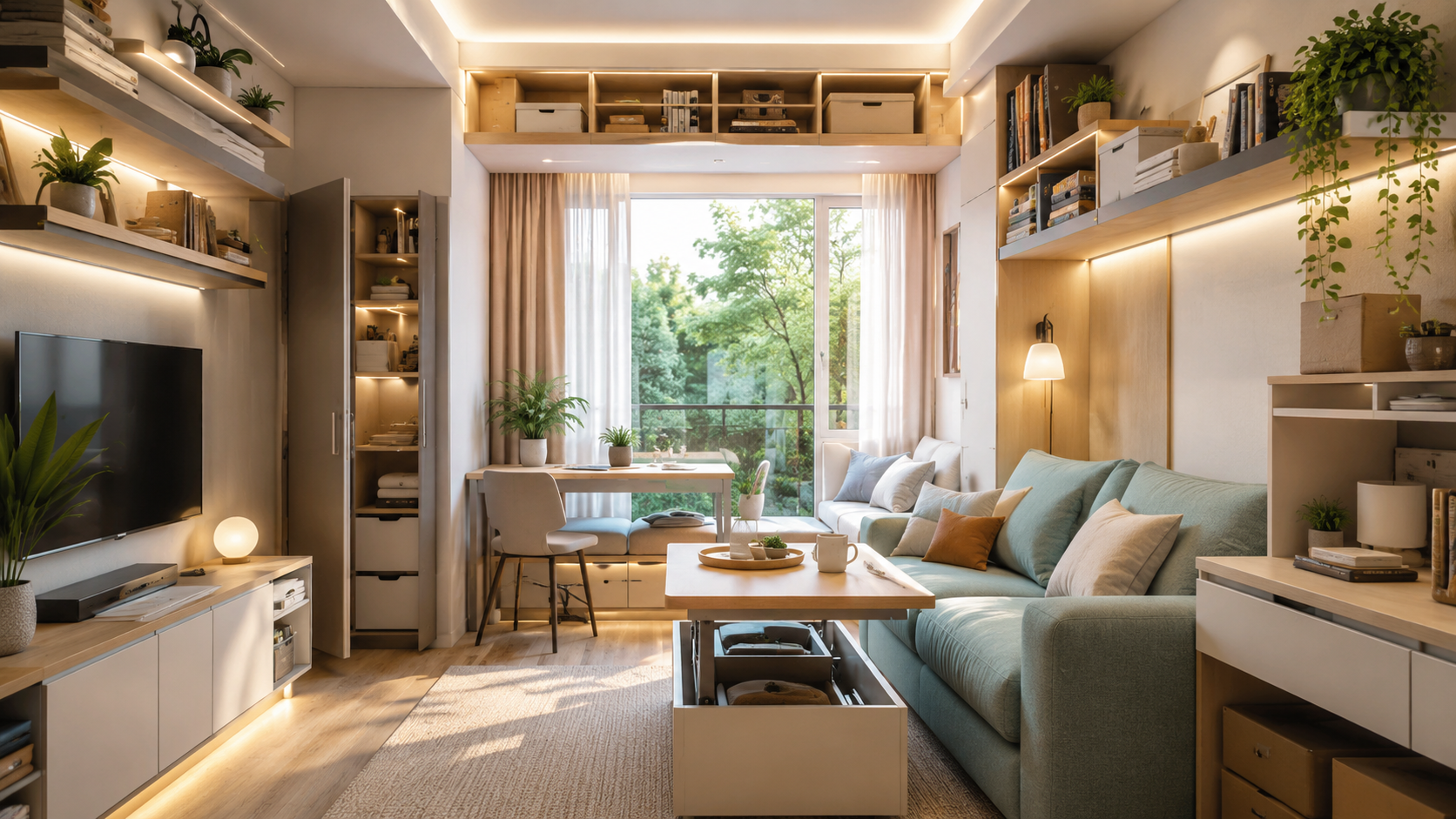
Use layered lighting, maximize natural light, choose reflective surfaces, brighten dark corners, and select fixtures that complement compact spaces.
Introduction
Good lighting can completely change how a room feels. Even if a space is limited in size, the right lighting choices can make it appear brighter, larger, and more comfortable. Many homeowners focus only on furniture and wall colors, but lighting often has an even greater impact on the overall atmosphere. These small room lighting ideas that create a brighter, more open feel are designed to help maximize available light while reducing shadows and visual heaviness. Whether you are working with a bedroom, living room, office, or studio apartment, thoughtful lighting can improve both functionality and appearance without requiring major changes to the room itself.
Maximize Natural Light Whenever Possible
Keep Windows Unobstructed
Natural daylight is one of the most effective ways to make a small room feel larger. Avoid placing tall furniture directly in front of windows whenever possible.
Choose Light Window Treatments
Heavy curtains can block valuable sunlight. Lightweight curtains or simple blinds allow more daylight to enter while maintaining privacy.
Use Layered Lighting for Better Balance
Combine Multiple Light Sources
Relying on a single ceiling fixture often creates uneven lighting. Layering different light sources helps eliminate dark areas and improves overall brightness.
Add Task Lighting
Desk lamps, reading lights, and bedside lamps provide focused illumination where it is needed most.
Include Ambient Lighting
Soft ambient lighting creates a comfortable atmosphere while supporting general visibility throughout the room.
Small Room Lighting Ideas That Create a Brighter, More Open Feel Through Reflection
Use Mirrors Strategically
Mirrors help distribute light throughout the room by reflecting both natural and artificial light. Placing a mirror opposite a window can significantly increase brightness.
Select Reflective Surfaces
Glass tables, glossy finishes, and light-colored décor can help bounce light around the room and reduce visual heaviness.
Choose Lighter Colors
Walls and furnishings in lighter shades reflect more light than darker colors, helping the room feel more open and airy.
Choose Fixtures That Suit Small Spaces
Wall-Mounted Lighting
Wall sconces free up floor and table space while providing effective illumination.
Slim Floor Lamps
Modern floor lamps with compact footprints can brighten a room without taking up significant space.
Flush-Mount Ceiling Fixtures
These fixtures work particularly well in rooms with lower ceilings because they provide light without visually lowering the room height.
Lighting Options Comparison
| Lighting Type | Primary Benefit | Best Location | Space Impact |
|---|---|---|---|
| Ceiling Light | General illumination | Center of room | Even brightness |
| Wall Sconce | Saves surface space | Side walls | Less clutter |
| Floor Lamp | Additional lighting | Corners | Brightens dark areas |
| Table Lamp | Task lighting | Desk or side table | Improves functionality |
| Mirror Lighting | Light reflection | Near mirrors | Creates depth |
| LED Strip Lighting | Accent illumination | Shelves and cabinets | Adds visual openness |
Step-by-Step Lighting Improvement Plan
Common Mistakes to Avoid
- Using only one overhead light source.
- Blocking windows with large furniture.
- Choosing dark lampshades that reduce light output.
- Ignoring room corners and shadowed areas.
- Using lighting that is too dim for the room size.
- Overcrowding surfaces with multiple decorative lamps.
Quick Lighting Checklist
- ✓ Allow as much natural light as possible.
- ✓ Use multiple light sources.
- ✓ Brighten dark corners.
- ✓ Add mirrors for reflection.
- ✓ Choose compact fixtures.
- ✓ Use light-reflective colors and finishes.
- ✓ Maintain clear, uncluttered surfaces.
Helpful Resource
Helpful Resource: U.S. Department of Energy – Lighting Choices
This official resource explains lighting options, energy-efficient bulbs, and practical ways to improve lighting throughout the home.
Frequently Asked Questions
What type of lighting is best for a small room?
A combination of ambient, task, and accent lighting usually provides the most balanced and effective results.
Can lighting make a room appear larger?
Yes. Proper lighting reduces shadows, improves visibility, and helps create a more open visual impression.
Are floor lamps suitable for compact rooms?
Many slim floor lamps are designed specifically for smaller spaces and can provide significant brightness without occupying much floor area.
Do mirrors really improve room brightness?
Mirrors can effectively reflect both daylight and artificial light, helping distribute illumination throughout the room.